
Fly Above the City: A Beginner's Guide to Paragliding in Dharamshala
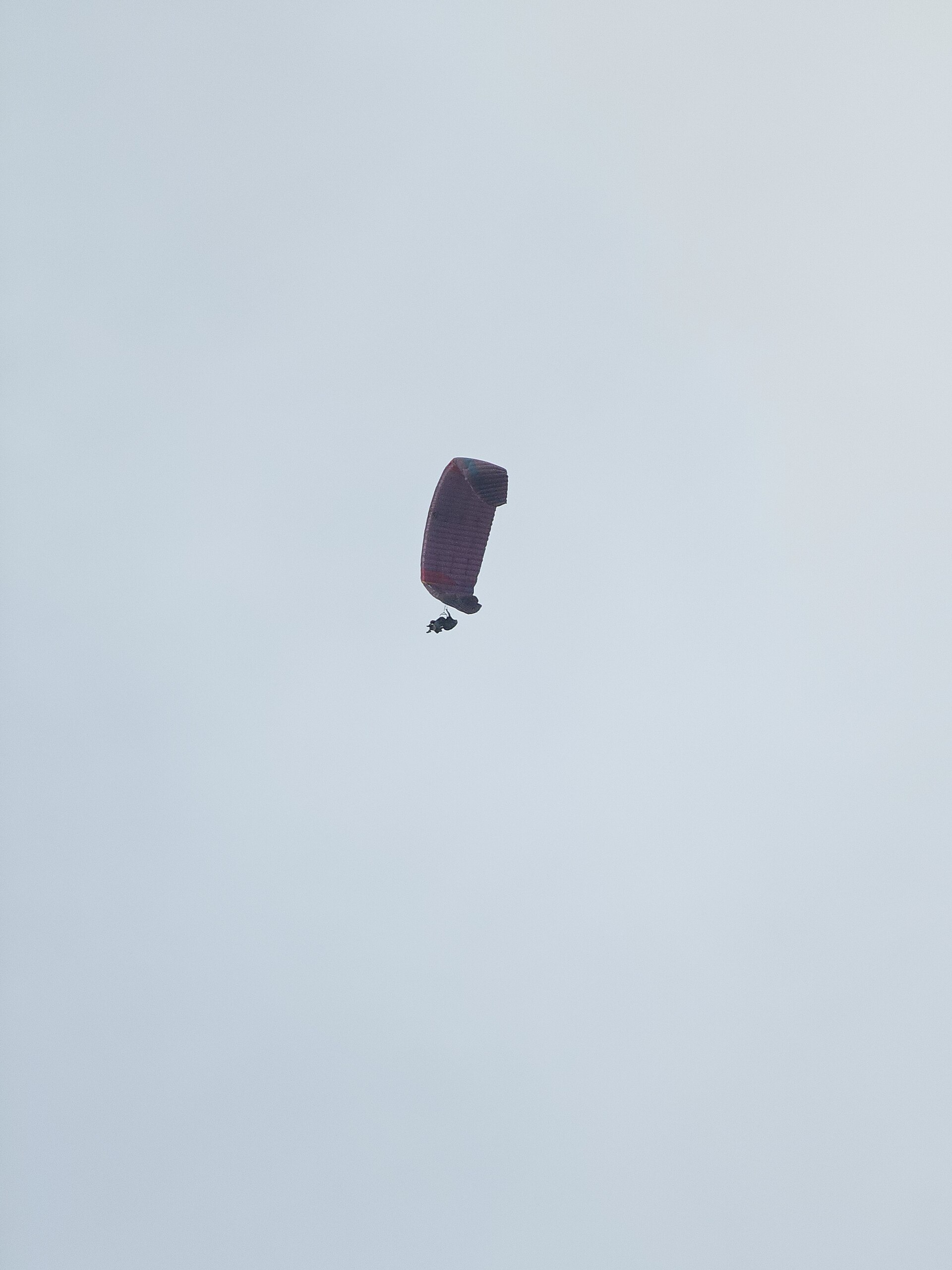
The first thing everyone asks me is some version of: "But what if the wind just... stops?"
I love that question, because the answer surprises people: a paraglider does not care much about wind stopping. It is a wing, not a kite. Forward speed keeps it flying. What actually matters is which way the wind blows — and that is exactly why we wait, sometimes for hours, watching ribbons and smoke before anyone runs off a hill.
This guide is everything I wish nervous first-timers knew before their first tandem flight — whether you fly from Indrunag right here in Dharamshala, or make the trip to world-famous Bir Billing.
Indrunag vs Bir Billing: Which Flight Is Right for You?
Most travellers do not realise they have two very different options within an hour of each other.
Indrunag — Dharamshala's Own Launchpad
Just 5 km from the Dharamshala bus stand, Indrunag's take-off sits at roughly 5,000 feet above the town. Flights last 5–15 minutes depending on thermals, gliding you over tea gardens, the cricket stadium and the sprawl of the Kangra valley before landing near Upper Dari or Badol.
Because the height difference is gentler than Billing, it is the ideal "first taste of flight" — perfect for tight itineraries, kids above the minimum age, and anyone whose stomach gets butterflies looking at the photos.
Bir Billing — The World-Class Site
About 65 km away, Billing's take-off at over 2,400 metres is one of the highest paragliding launch points on the planet — it has hosted World Cup competitions. Flights run longer, higher and wilder, with genuine cross-country potential. If paragliding is the main reason for your trip, Bir Billing belongs on your list. We include transport from McLeod Ganj in our tandem paragliding package, so you do not have to figure out the logistics yourself.
Honest recommendation: First ever flight, short on time, or mildly nervous? Indrunag. Chasing the full Himalayan big-mountain experience? Bir Billing. Many guests end up doing both — and yes, the second flight feels completely different once you know what to expect.
What Actually Happens on Flight Day (Step by Step)
Knowing the sequence kills half the fear, so here is exactly how a tandem flight unfolds:
- Weather check. Your pilot reads wind direction, cloud base and thermal strength. Bad conditions = postponed flight. Annoying, but this discipline is why tandem paragliding's safety record is so strong.
- Gear up. Helmet on, harness clipped to the pilot's spreader bars — two independent connections, checked twice. Watch your pilot do it; a good one invites you to verify the clips yourself.
- The briefing. One instruction matters most: when the pilot says run, you run. Do not sit down, do not stop halfway. The wing inflates above you and lifts you both — running into the wind is the whole trick.
- The run. Three to five steps and the ground disappears. Most first-timers describe this moment as shockingly gentle — like an elevator that quietly starts moving sideways.
- The flight. You settle into the harness seat. Your pilot steers with weight shift and brake lines, hunting for smooth air. Talk! Point at things! Nervous flyers say the fear evaporates within thirty seconds of takeoff.
- The landing. Into the wind, legs up as instructed, a few skidding steps, done. Landings are far softer than people expect.
Is Tandem Paragliding Safe? The Uncomfortable Truth About Cheap Flights
Tandem paragliding with a certified pilot is remarkably safe — safer than driving to the take-off point, statistically speaking. But that sentence has a condition attached: certified pilot, maintained equipment, honest weather calls.
Himachal has seen accidents caused by unlicensed operators flying unsuitable sites in marginal conditions to save costs. So vet your operator properly:
- Pilots licensed and registered (APPI certification or Himachal Tourism licensing)
- Equipment inspected and replaced on schedule — ask when the wing was last checked
- Willingness to postpone for weather, even if you paid in advance
- Weight limits respected (typically around 100 kg max for tandem passengers)
- Insurance coverage offered as standard
We publish our pilots' credentials openly on our about page because we believe you should ask these questions of every operator — including us.
Best Season for Paragliding in Dharamshala & Bir
The flying season generally runs October to June, pausing during monsoon (July–August) when rain clouds and unstable air shut operations down. Within that window:
- October–November: Post-monsoon clarity, smooth autumn air, spectacular visibility. Arguably the best months.
- December–February: Cold but flyable on clear days; winter light over snow-dusted Dhauladhars is unreal.
- March–June: Peak season — warmer, stronger thermals, longer flights, busier take-offs.
Mornings typically offer smoother air; midday brings bigger thermals (fun for some, queasy for others). Tell your pilot how adventurous you feel.
Who Can Fly? Age, Weight and Health Basics
Tandem flying needs no training or fitness — the pilot does everything. General guidelines: minimum age around 14 (younger kids fly at some sites with parental consent), maximum passenger weight around 100 kg, and reasonable honesty about heart conditions, severe vertigo or recent surgery. Pregnant travellers should skip it. When in doubt, call and ask — pilots would rather answer questions than improvise in the air.
Frequently Asked Questions
Will I get motion sickness?
Most people don't — flights are smoother than a winding mountain road. Eat light beforehand, avoid heavy breakfasts, and tell your pilot early if you feel queasy; they can steer toward calmer air and land sooner.
Can I bring my camera or phone?
Loose devices and open hillsides are a bad combination. Pilots carry secure mounts — most operators offer GoPro photo/video packages. Ask about it when booking rather than risking your phone.
What should I wear?
Layers, closed shoes with grip, and sunglasses. It is noticeably colder in flight than on the ground, and landing fields can be dusty or grassy.
How much does a tandem flight cost?
Rates vary by site, season and flight duration, and most operators quote per person including gear and insurance. Rather than list numbers that go stale, we give current pricing directly — call or message us and we will share today's exact rate for Indrunag and Bir Billing, including any video add-ons.
What happens if the weather cancels my flight?
A responsible operator reschedules you free of charge or refunds you. If an operator pressures you to fly in sketchy weather, walk away. The mountain will still be there tomorrow.
Ready to trade the road for the sky? Book your tandem paragliding flight with certified local pilots, or discuss your flight on a quick call — we will help you pick the right site and season for your first (or fifth) flight.